1–3
Placenta
Pioneer years
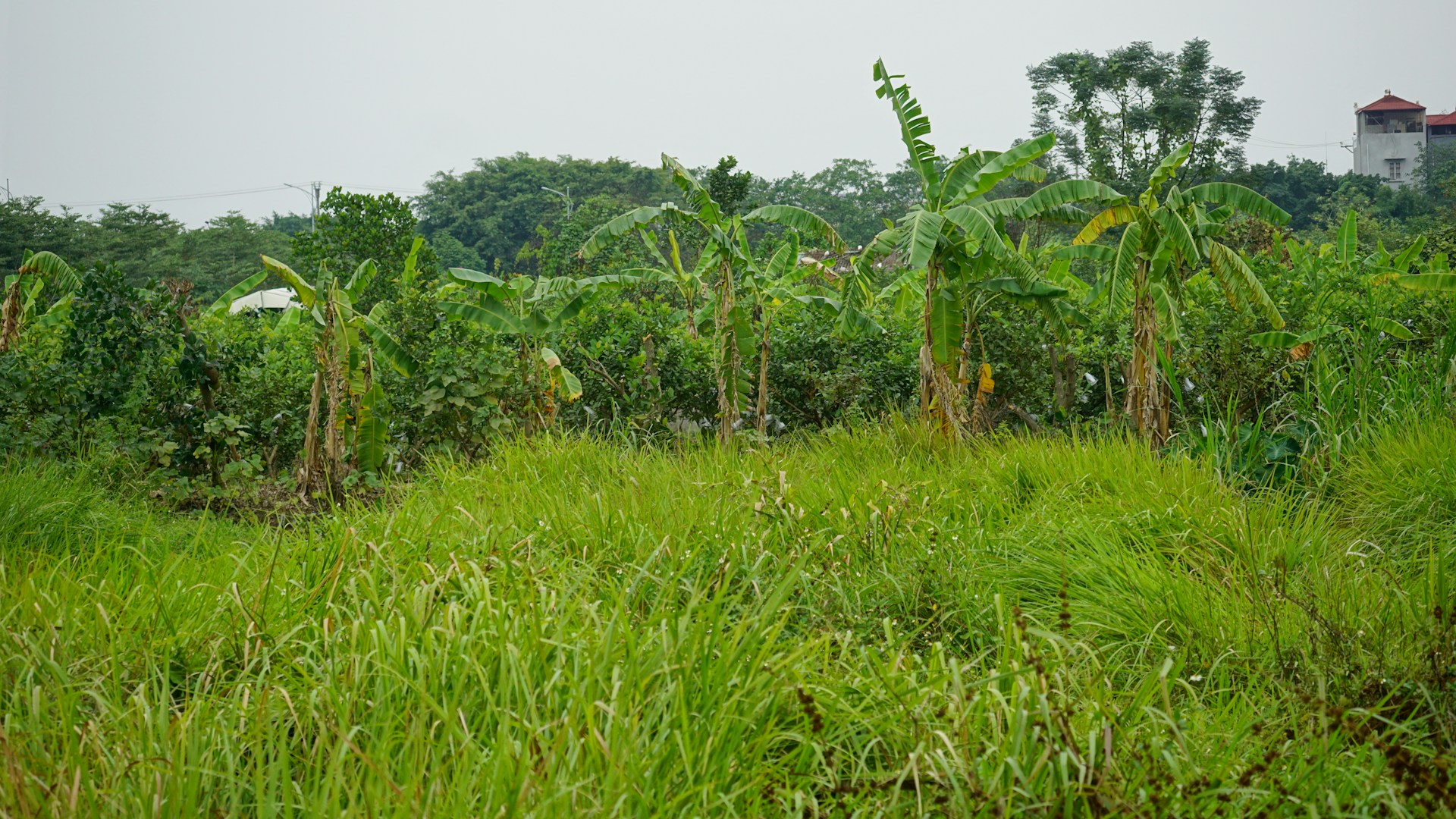
Fast support species and short-lifecycle crops establish cover, fix nitrogen, and shade out grass pressure. Bananas, pigeon pea, nurse legumes. Early food while the canopy is still open.
Four canopy layers, a ten-year succession, and one repeating module. Choose your climate, stack the layers, and check every species against your country's invasive list before you plant it.
Nature fills every layer of light, from the tallest emergent tree down to the ground. A well-designed food forest does the same on purpose. You put production species where you want the yield, fast-growing support species that build fertility in the gaps, and plan for it all to shift over a decade as the canopy matures.
Each layer has a target for how much of the sky it fills at maturity. Percentages overlap because layers occupy different heights — the point is that light gets used all the way down, not that the numbers sum to 100.
Light, not height. A species' layer is set by the sun it needs at maturity — not how tall it grows.
Target canopy fill per layer, after the food-forestry.com module framework. Support (nitrogen-fixing) species are planted at high density between the productive trees, then progressively thinned as the canopy closes.
Short-lifecycle pioneers protect the soil and feed the young trees early. As the long-lived climax species mature, the pioneers get chopped down for mulch and replaced by the trees you actually planted for. You plant for three timescales at once.
Every species has a productive lifespan. Each wave peaks and hands the system to the next — short-lifecycle species carry the transition toward the long-lived, generally higher-value climax layer.
Fast support species and short-lifecycle crops establish cover, fix nitrogen, and shade out grass pressure. Bananas, pigeon pea, nurse legumes. Early food while the canopy is still open.
The main fruit trees come online and start carrying the system. Support species are thinned to open light. This is where a food forest starts paying you back in volume.
Emergent and high-strata trees reach full size — timber, nuts, cacao under shade. The system mostly maintains itself and recycles its own fertility. This is the layer that lasts longest and pays the most.
Rather than placing hundreds of trees by hand, you design a single repeating unit — one rhythm of emergent, high, medium, and low — then tile it down each planting line. Spacing stays consistent, light stays predictable, and the whole thing is easier to manage.
Support rows sit offset on both sides of each tree line, filling light gaps and feeding soil while the canopy grows. Then the whole line repeats across the parcel — modules × rows = the full planting plan.
Filter by climate (temperate, Mediterranean, subtropical, or tropical), plus strata, lifecycle, and role. Every species lists its mature size, spacing, and whether it's flagged as invasive. Invasive status is regional, so we flag widely-documented problem species and screen against your own country's list — starting with the Dominican Republic and the Caribbean, where we work.
No species match those filters. Try widening your selection.
Sizes and spacing are planning estimates and vary with soil, water, and management. Invasive-status flags reflect known risk in the Dominican Republic and wider Caribbean; always confirm against local regulations before planting. Matrix format, module method, and diagram concepts adapted from the food-forestry.com design templates — credit where it's due. This matrix is a starting point — a real design is fitted to your parcel in the System Design engagement.
The final planning move: place a species in every box. Empty boxes are the gaps in your system — a layer with no yield, or a timescale with nothing growing. This grid updates with the climate you pick above.
Years 1–3 Placenta |
Years 3–8 Secondary |
Years 10+ Climax |
|---|
Auto-filled with example species from the matrix for the selected climate. Blank cells mean no screened species in the current data for that layer/phase — a real design fills these deliberately.
The matrix gets you thinking in layers. A real food forest is fitted to your soil test, your rainfall, your goals — and screened for invasives by country. That's the System Design engagement.