Grab a handful of your dirt. Scroll until you see a photo that matches. Every card tells you what you're looking at, what it means for growing, and what to do next.
Every photo below is a real, documented soil sample — no stock filler, no AI images. Credits at the bottom of the page.
Dig down 6 inches (15 cm). Surface dirt lies — it's sun-bleached and dried out. The real story is below.
Grab a golf-ball-sized handful. Pick out rocks, roots, and mulch.
Moisten it slightly — damp, not muddy. Color and texture both read truer when moist.
Soil color is chemistry you can see. Hold your handful next to these photos and find your match.
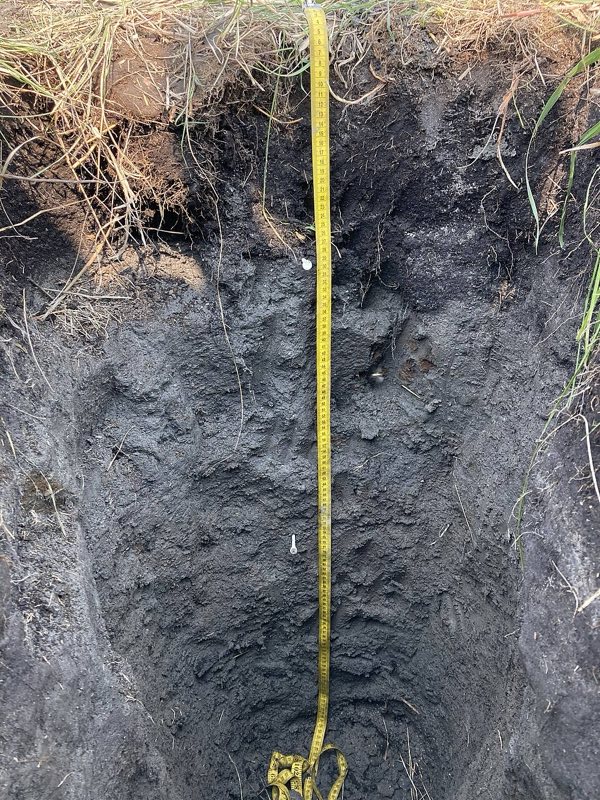
The color of organic matter
Deep, dark soil means decomposed plant material (humus) has built up. This is the soil everyone wants — it holds water, feeds microbes, and releases nutrients steadily.
What to do: Protect it. Keep it covered with mulch or living plants, don't till it, and it will keep working for you.
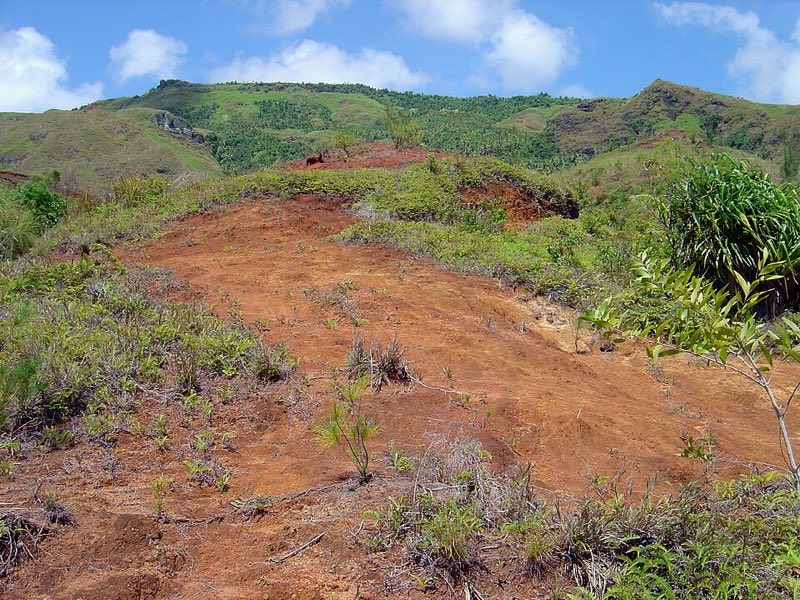
Iron oxide — rust, literally
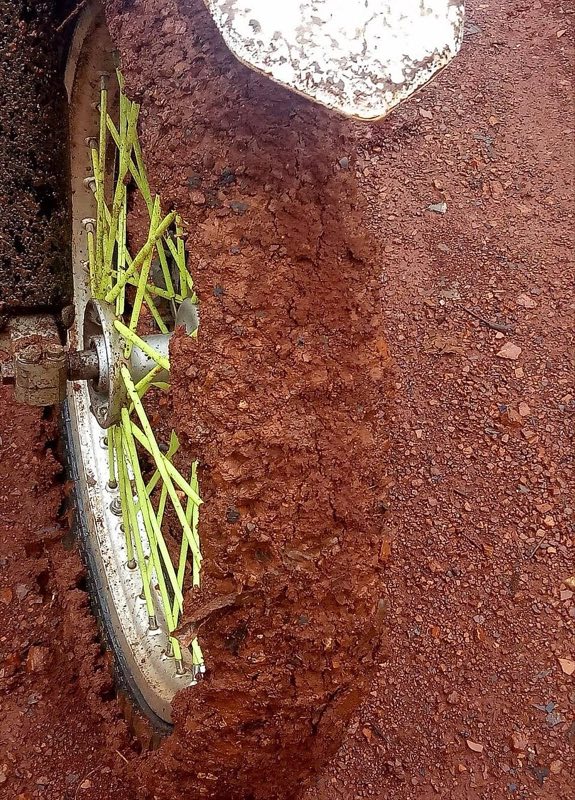
Red means iron minerals that have been exposed to air — a sign of good drainage and heavy weathering. Very common in the tropics and the Caribbean. Often low in organic matter and slightly acidic.
What to do: Drainage is usually fine; fertility is the project. Build organic matter with compost, mulch heavy, and consider a pH test before planting.
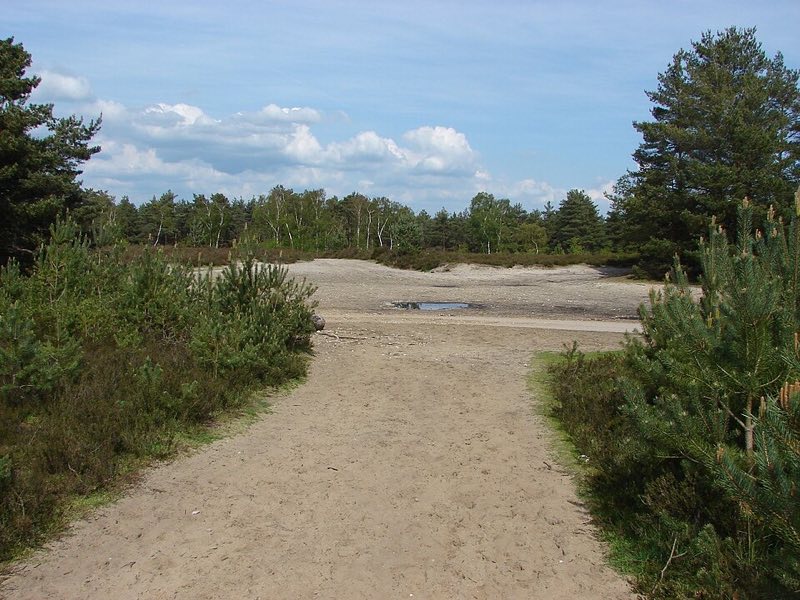
Sand-heavy, leached, or both
Light-colored soil has little organic matter, and rain washes nutrients through it fast. Water drains almost instantly — great for root crops, brutal for thirsty plants.
What to do: Add organic matter relentlessly — compost, manure, cover crops. It's the only thing that makes sand hold water and nutrients.
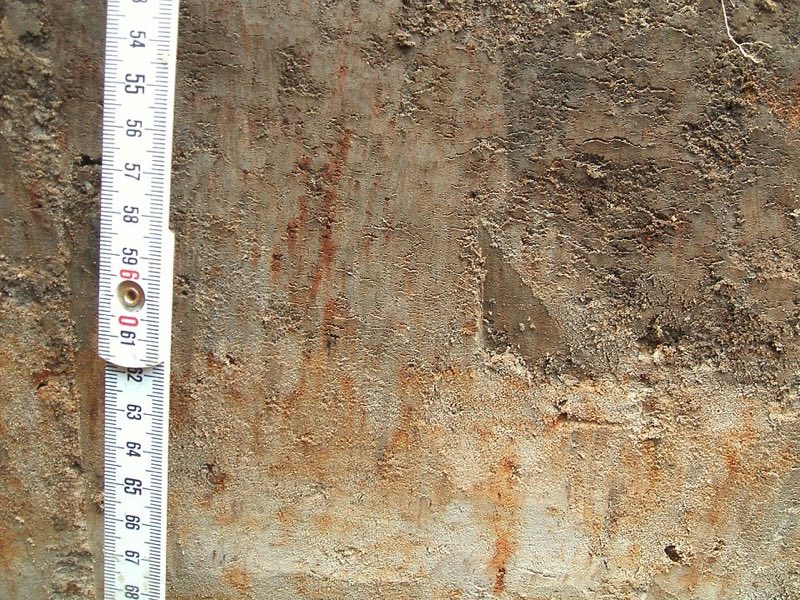
Mottling — the waterlogging fingerprint
Gray soil streaked or spotted with orange means the ground sits waterlogged part of the year, then dries out. Solid gray or blue-gray with a swampy smell means it's waterlogged most of the time. Roots drown in it.
What to do: Don't fight it with the wrong plants. Raise beds, plant water-tolerant species, or redirect the water. This is exactly what a land audit maps out.
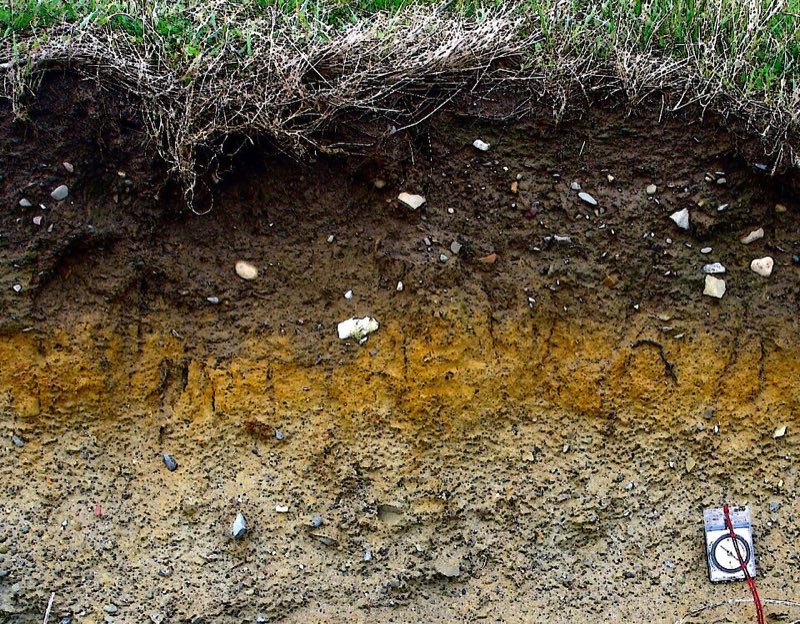
Soil horizons — your land's biography
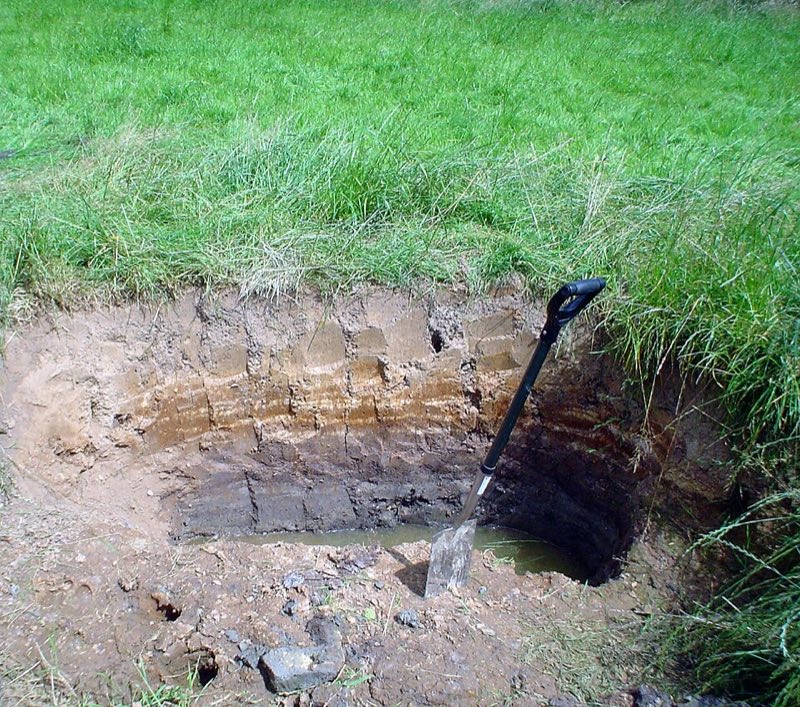
Dig a knee-deep hole and you'll usually see layers: dark topsoil, a colored middle, pale parent material below. The thickness of that dark top layer is the single fastest read on how much fertile soil you actually have. Two inches and fourteen inches are very different starting points.
What to do: Measure your dark layer. Thin topsoil means build up (mulch, compost, chop-and-drop) before you plant anything demanding.
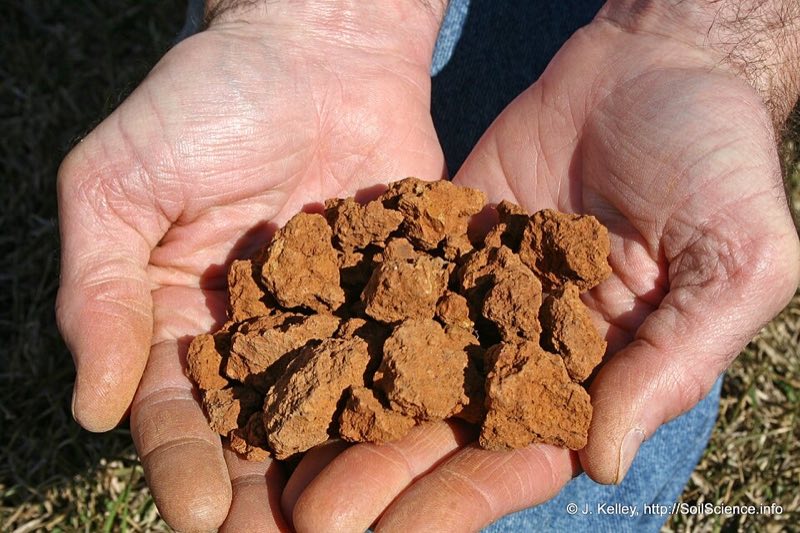
Color tells you chemistry; texture tells you how water and roots will move. You only need your hands.
Squeeze a moist handful and open your hand. If it crumbles immediately and feels gritty, you're sandy. Fast drainage, low nutrient holding.
Forms a ball that breaks apart when poked. Feels slightly gritty and slightly smooth. This is the sweet spot — most crops love it.
Roll it between thumb and finger. If it presses into a shiny ribbon an inch or longer, you've got clay. Nutrient-rich but slow-draining and easily compacted.

If your soil dries into dense clods you could throw through a window, that's clay structure. It's not bad soil — it's rich soil that needs organic matter and zero tilling to open up.

Clay announces itself in the wet season — it cakes onto boots, tools, and tires. If walking your land after rain adds two pounds to each foot, plan drainage and raised planting zones before anything else.
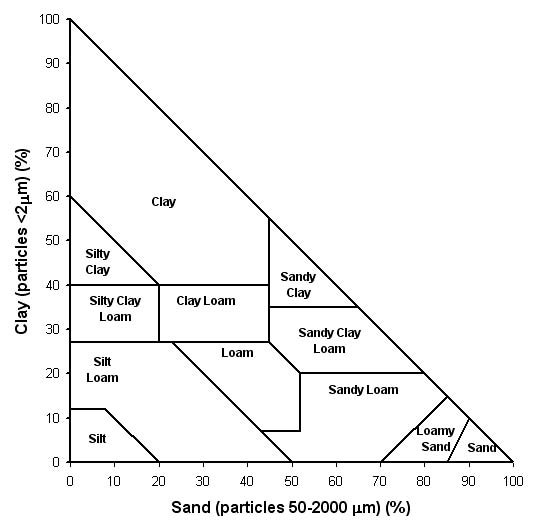
Example: 50% sand / 30% silt / 20% clay lands in "loam" — dead center, right where you want to be.
Color and texture predict drainage — these two checks confirm it.

Dig a hole one foot deep, fill it with water, let it drain, then fill it again and time it. Draining 1–3 inches per hour is ideal. Under 1 inch per hour — or standing water like this pit — means poor drainage; over 4 means it drains too fast to hold moisture.
What to do: Slow drainers get raised beds, swales, or water-loving species. Fast drainers get organic matter and heavy mulch.

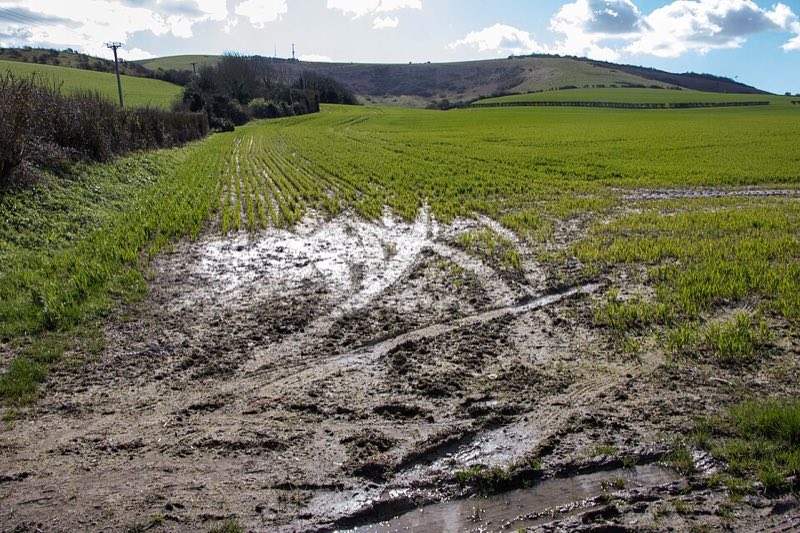
Walk your land 24 hours after a good rain. Puddles that linger, shiny compacted paths, moss, sedges, or rushes all point to water sitting where roots need air.
What to do: Map the wet spots — they're design information, not problems. A pond, a swale, or a water-tolerant guild might belong exactly there.
The free land audit takes what you just learned and maps it across your land — soil, water, sun, slope, and what to plant where.